INSTRUVIO

Sample CPD module

Safe Manual Handling

An interactive module for anyone who lifts, carries, pushes or pulls on site.

  • 36 steps
  • 10 questions
  • 8/10 to pass
  • 20 minutes

Step 1 of 46

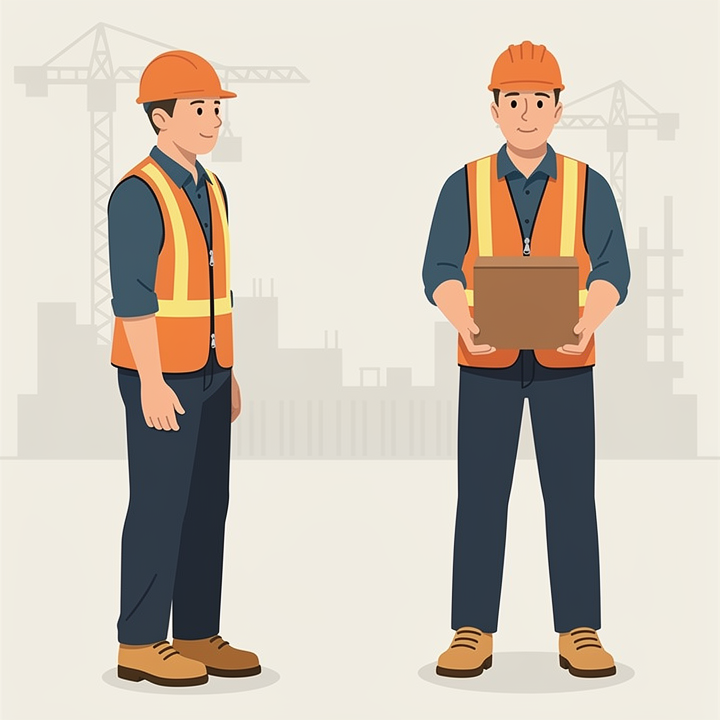
Two site workers, one carrying a box

Introduction & legislation

Welcome

  • Manual handling is part of nearly every job on a building site. Done badly, it is also one of the quickest ways to end up injured.
  • This module takes about 20 minutes. It covers what the law expects, how to assess a lift, and the technique that keeps your back out of trouble.
  • There are ten questions along the way. You need 8 out of 10 to pass.
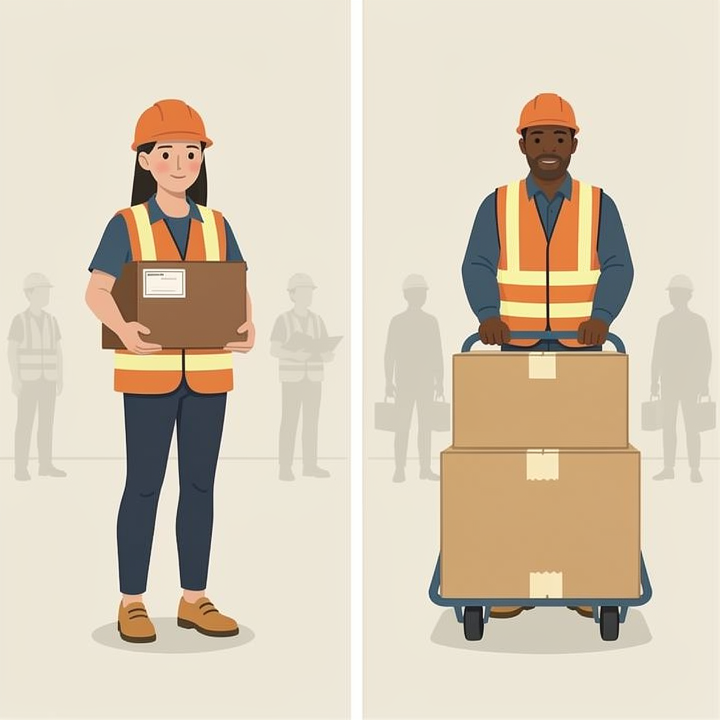
A worker carrying a box beside a worker pushing a loaded trolley

Introduction & legislation

What counts as manual handling

  • The Regulations define manual handling of loads as any transporting or supporting of a load by one or more employees.
  • That includes lifting, putting down, pushing, pulling, carrying or moving a load.
  • A load is not only a box. It can be a bag of sand, a length of timber, a tool, a wheelbarrow, a gas cylinder or a person.

If you move it with your body rather than a machine, it is manual handling.

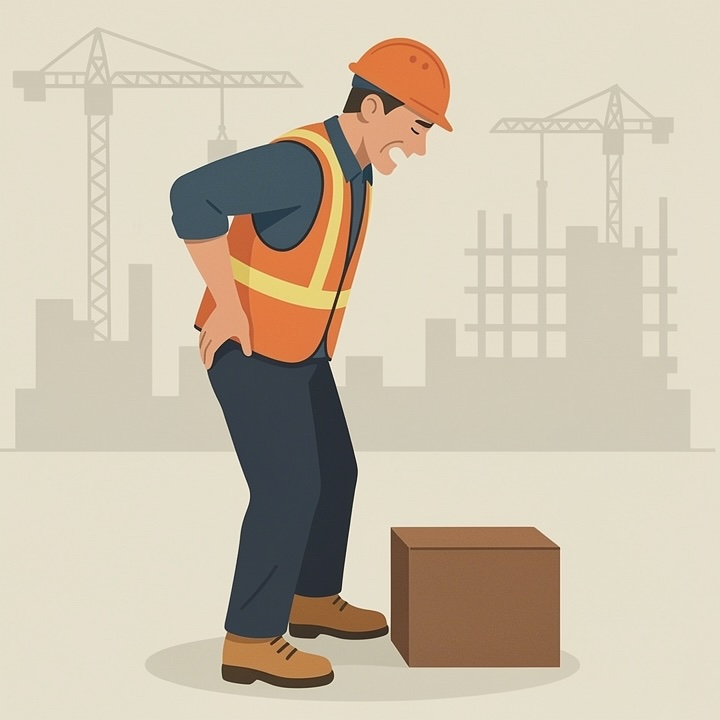
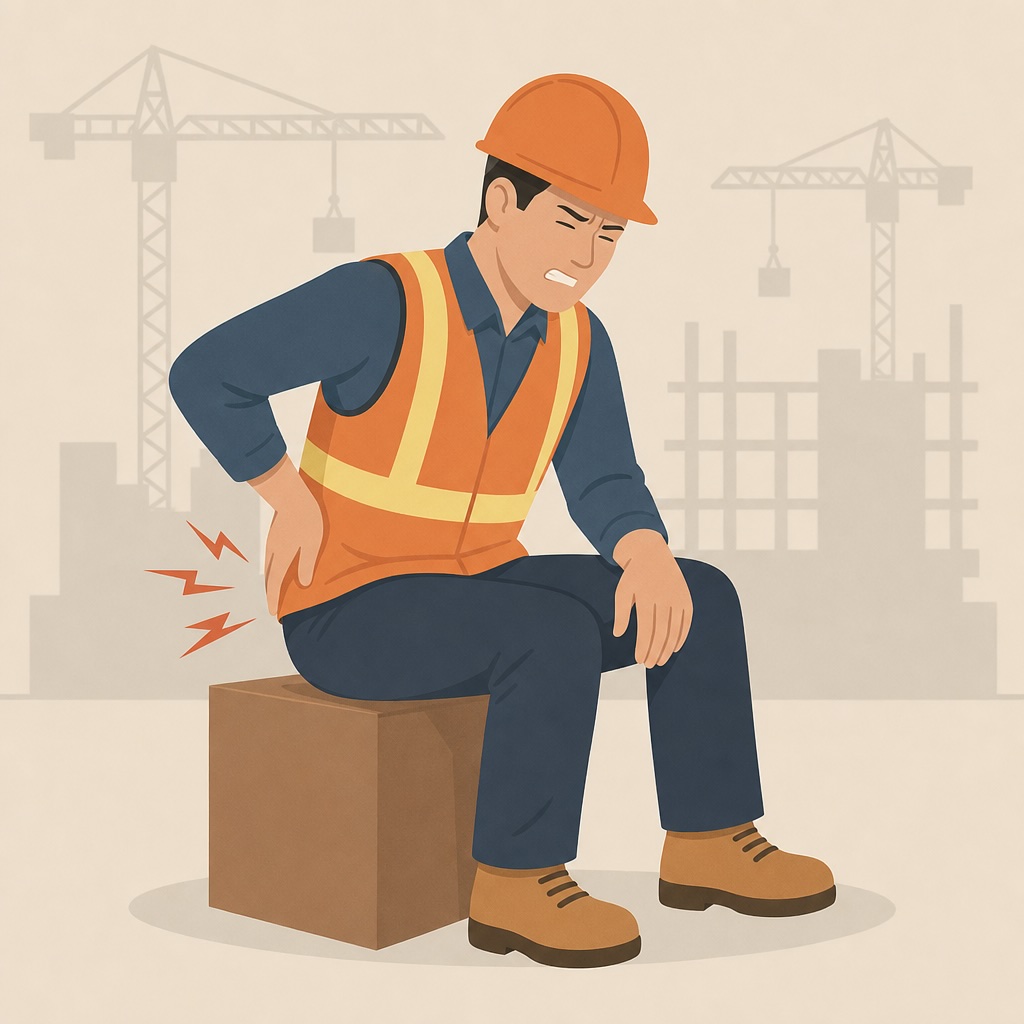
A worker holding their lower back in pain

Introduction & legislation

Why it matters

  • Manual handling is the single biggest cause of workplace injury reported in Ireland.
  • In 2022, manual handling accounted for 2,712 non-fatal injuries reported to the Health and Safety Authority: 30% of the total. Manual handling and falls together made up 55%.
  • Back injuries are slow to heal, easy to repeat, and can follow you for the rest of your working life.
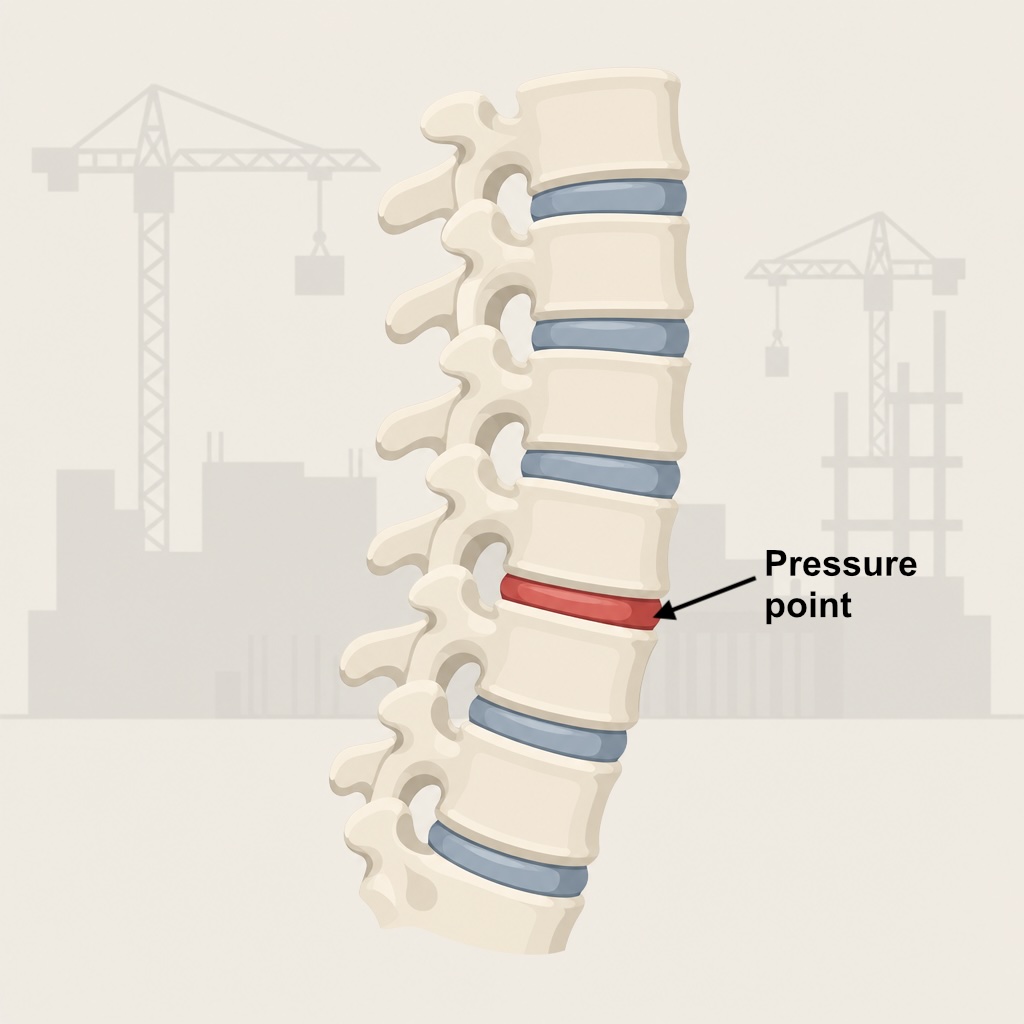
Diagram of vertebrae separated by discs, with one disc under strain

Introduction & legislation

How your back works

  • Your spine is a stack of bones called vertebrae, separated by soft discs that act as cushions.
  • Muscles and ligaments hold the stack in line. The spine is strongest when it keeps its natural S-shape.
  • Bending and twisting under load squeezes the discs unevenly. Do that often enough and the disc gives way.
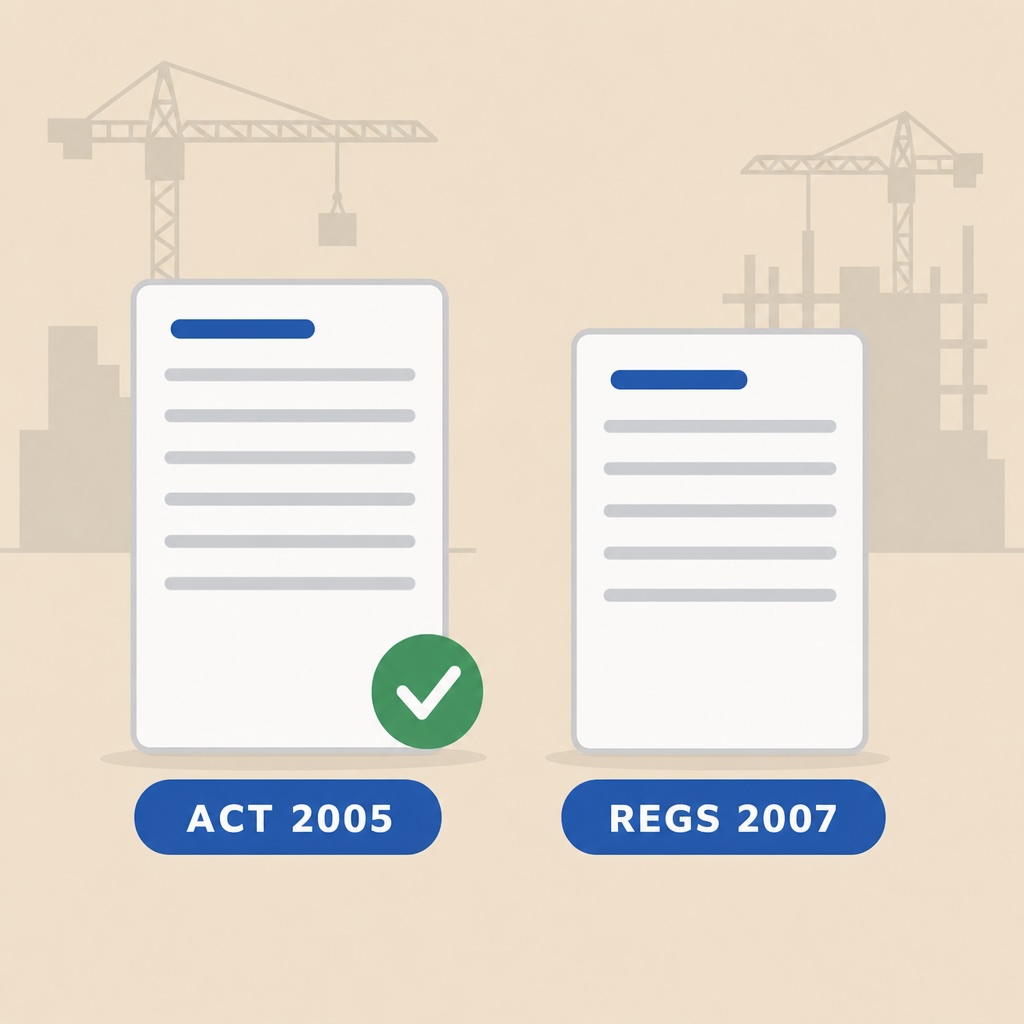
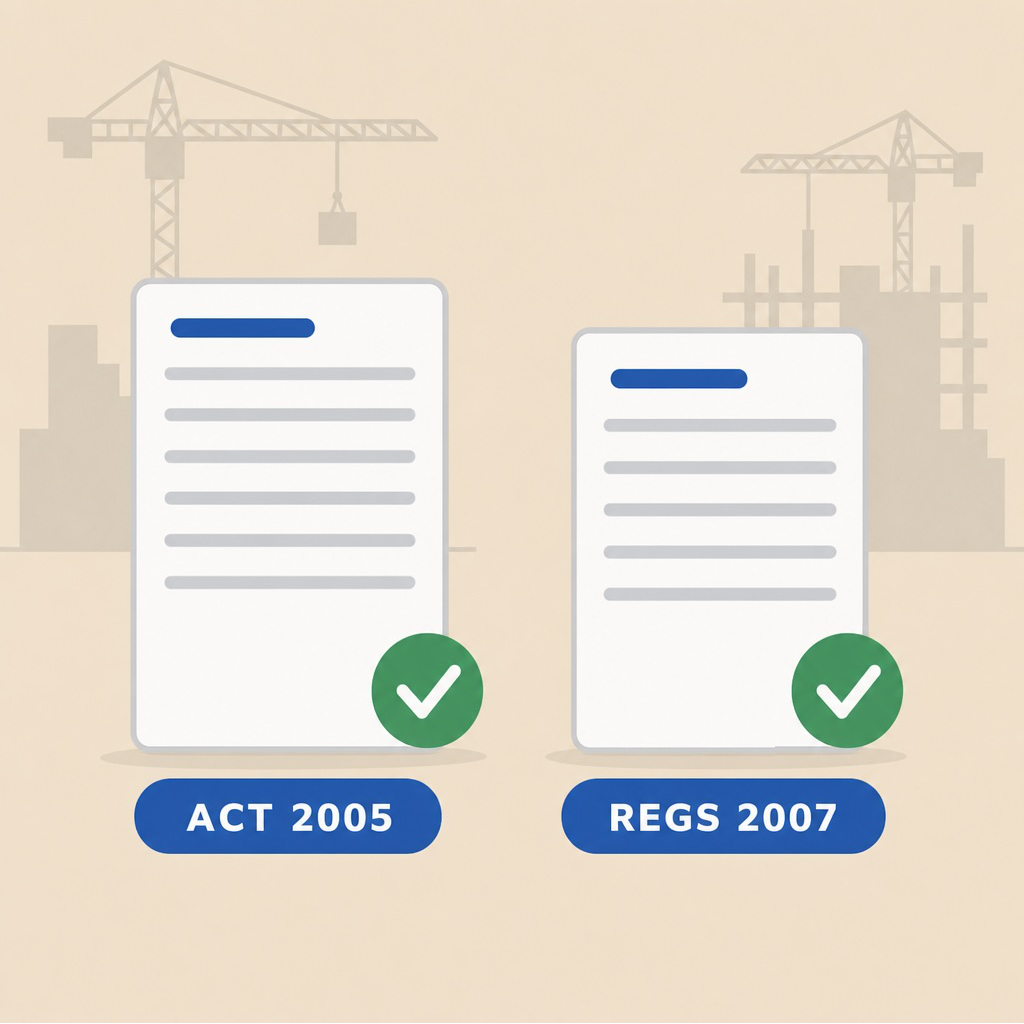
Two legal documents with a tick

Introduction & legislation

The law: the 2005 Act

  • The Safety, Health and Welfare at Work Act 2005 is the main piece of Irish safety law.
  • It places a duty on employers to provide a safe place of work, safe systems of work, and the information, instruction, training and supervision needed to work safely.
  • It also places duties on employees, which we cover in the next section.
A regulation document under a magnifying glass

Introduction & legislation

The Regulations

  • Manual handling is dealt with in Chapter 4 of Part 2 of the Safety, Health and Welfare at Work (General Application) Regulations 2007.
  • The Regulations set out what the employer must do, and Schedule 3 lists the risk factors that a manual handling assessment has to consider.
  • Those factors fall into five groups: the load, the physical effort, the working environment, the requirements of the activity, and the individual doing it.
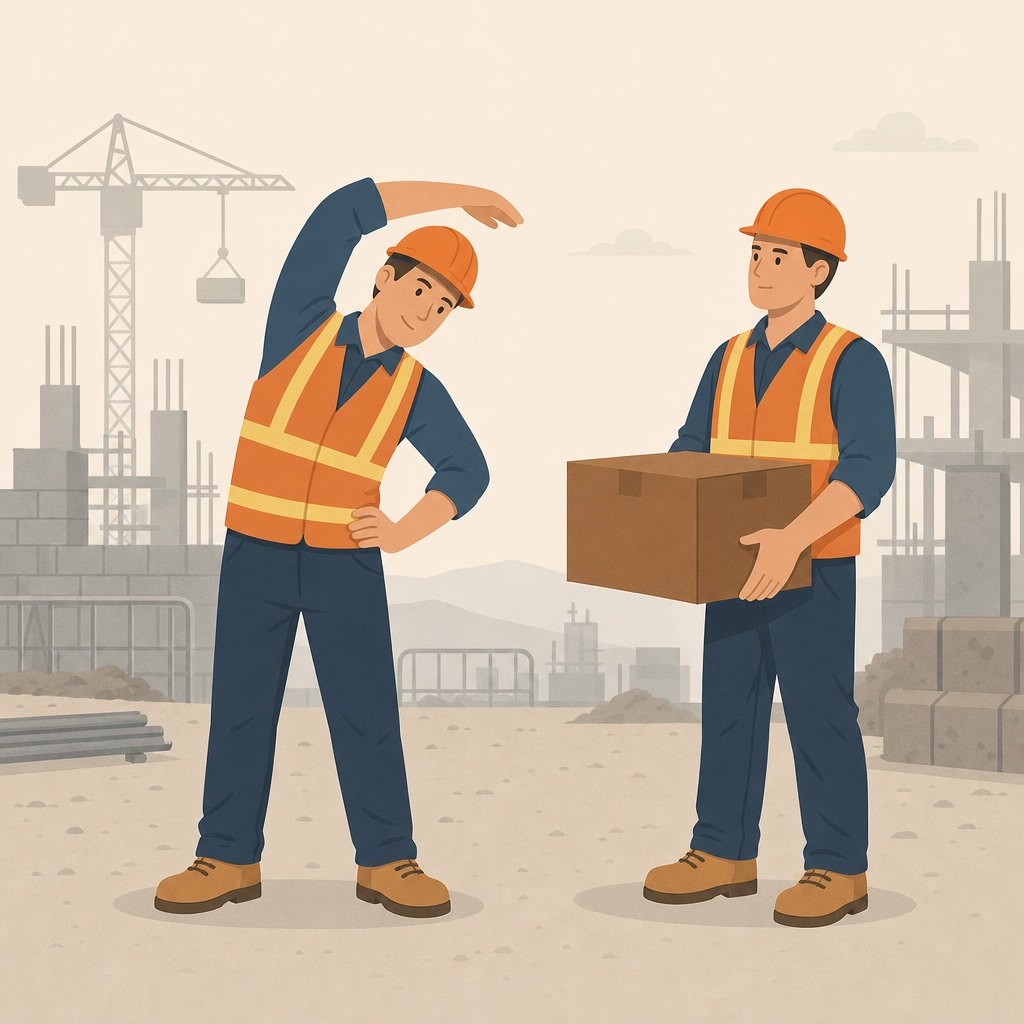
A worker stretching beside a worker standing upright

Introduction & legislation

Two ways injuries happen

  • Sudden injuries happen in one movement: a heavy awkward lift, a slip mid-carry, a twist to put something down.
  • Cumulative injuries build up over months of small, repeated strains that never quite get a chance to recover.
  • Both can end in the same place: strains, sprains, or damage to a disc.

Anywhere in the musculoskeletal system can be injured, not just your lower back.

A checklist with a tick

Introduction & legislation

Section summary

  • Manual handling covers lifting, carrying, pushing, pulling and supporting any load.
  • It causes around 30% of reported non-fatal workplace injuries in Ireland.
  • The rules come from the 2005 Act and Chapter 4 of Part 2 of the 2007 General Application Regulations.

Introduction & legislation · Question 1 of 10

Which of these is NOT manual handling?

Introduction & legislation · Question 2 of 10

Which law sets out the manual handling rules that apply in Ireland?

A stooped lift marked with a red cross beside a loaded trolley marked with a green tick

Employer & employee duties

Avoid, assess, reduce

  • The employer’s duties run in a fixed order.
  • First, avoid hazardous manual handling wherever it is reasonably practicable, by organising the work differently or using equipment.
  • Where it cannot be avoided, assess the risk. Then reduce that risk as far as reasonably practicable.

Avoid first. A lift that never happens cannot hurt anybody.

A sack truck, a pallet trolley and a hoist

Employer & employee duties

Designing the lift out

  • Deliver closer to the point of use, so loads travel less.
  • Order materials in smaller units, or split a load before moving it.
  • Provide trolleys, sack trucks, pallet trucks, hoists, telehandlers and roller tracks — and keep them where the work is.
A worker considering a task beside an assessment form

Employer & employee duties

Assess what is left

  • A written manual handling risk assessment is required for handling that cannot be avoided.
  • It has to consider the factors in Schedule 3 of the Regulations, which we cover in the next section.
  • It should be reviewed when the job, the load, the place or the people change.
A trainer in front of two workers under a training sign

Employer & employee duties

Information and training

  • Employers must give employees information on the weight of loads and how to handle them safely.
  • Employees who carry out manual handling must receive training from a person with the relevant training and experience.
  • Training should be specific to the actual work, not generic, and refreshed when things change.
A worker carrying a load correctly, marked with a green tick

Employer & employee duties

Your duties as an employee

  • Under the 2005 Act you must take reasonable care of your own safety and that of anyone affected by what you do.
  • Follow the safe system of work, use the equipment provided, and use it the way you were trained to.
  • Do not be under the influence of anything that puts you or others at risk, and do not interfere with or misuse safety equipment.
A worker filling in a report form

Employer & employee duties

Report it

  • Report anything that could injure someone: a blocked route, a broken trolley, a load heavier than expected, a near miss.
  • Report injuries as soon as they happen, even minor ones. A small strain ignored is how long-term back trouble starts.
  • Tell your employer if a health condition, an injury or a pregnancy affects what you can safely handle.
A worker stretching before work

Employer & employee duties

Looking after your back

  • Warm up gently before heavy work, and change position regularly through the day.
  • Keep general fitness up and keep your weight within a healthy range for your height.
  • If back pain starts, stop the activity and get it looked at rather than working through it.

Employer & employee duties · Question 3 of 10

A pallet of blocks has to be moved across site. What should the employer consider first?

Employer & employee duties · Question 4 of 10

Which of these is an employee duty under the Safety, Health and Welfare at Work Act 2005?

A worker studying a task beside an assessment form

Risk assessment

What an assessment is for

  • A manual handling risk assessment looks at the whole job, from where the load starts to where it ends up.
  • Its purpose is to find the hazardous parts, decide who could be harmed, check what controls already exist, and decide what else is needed.
  • The person carrying it out should know the Regulations, know the job, and be competent to do it.
Four coloured panels: Task, Individual, Load, Environment

Risk assessment

TILE

  • The Schedule 3 factors are easiest to remember as TILE.
  • Task — what the handling actually involves. Individual — the person doing it. Load — what is being moved. Environment — where it happens.
  • Run through all four before a lift you have not done before.

Task · Individual · Load · Environment

A stooped lift marked with a cross beside a knees-bent lift marked with a tick

Risk assessment

T — Task

  • Does the task involve stooping, twisting, or reaching above shoulder height or below knee height?
  • Is the load held away from the body, carried a long distance, or lifted and lowered repeatedly?
  • Is there enough rest, and can the pace be set by the worker rather than by a machine or a delivery?
A worker with labels asking about training, fitness, footwear and gloves

Risk assessment

I — Individual

  • Has the person been trained for this handling, and do they have the information they need?
  • Does the job call for unusual strength, height or reach?
  • Could it put someone at particular risk — a pregnant worker, a young worker, or someone with an existing injury or health condition?
  • Does their clothing, footwear or PPE get in the way of a safe lift?
A box labelled heavy, awkward and unstable

Risk assessment

L — Load

  • Is it heavy, bulky or awkward to hold? There is no legal maximum weight in Ireland — it depends on the whole situation.
  • Is the contents likely to shift, or is the load unstable or unpredictable?
  • Are there handholds, or could packaging be changed to add some?
  • Is it hot, cold, sharp, or hazardous if it spills?
A route with steps and level changes under bright sun

Risk assessment

E — Environment

  • Is there enough space to stand and move properly, and is the route clear?
  • Are floors level, dry and in good condition, or are there steps, slopes and changes of surface?
  • Is the lighting good enough to see the load and the route?
  • Is it hot, cold, wet or windy? A gust can turn a sheet of ply into a sail.
Handling aids: a sack truck, a pallet trolley and a hoist

Risk assessment

Other factors

  • What equipment is available, is it maintained, and does everyone know how to use it?
  • Does the way the work is organised force a rush — deliveries at the end of a shift, a single person doing a two-person job?
  • Does PPE that is needed for another hazard make the handling harder, and how is that dealt with?
A completed assessment form with a tick and an arrow to action

Risk assessment

Write it down and act on it

  • The assessment should be written down and kept with the safety documentation.
  • Findings have to be acted on. An assessment that sits in a folder changes nothing on the ground.
  • Review it when the load, the equipment, the place or the people change, or after an incident.
A checklist with a tick

Risk assessment

Section summary

  • Assess the whole job from start to finish, using TILE.
  • There is no single safe weight limit: weight is only one factor among many.
  • Record the assessment, act on it, and review it when things change.

Risk assessment · Question 5 of 10

What do the letters TILE stand for?

Risk assessment · Question 6 of 10

A load has no handholds and the contents shift when it moves. Which TILE factor is that?

Risk assessment · Question 7 of 10

Which statement about weight limits in Ireland is correct?

A worker planning a lift, with a question mark

Handling techniques

Think before you lift

  • Where is it going, and is the route clear all the way?
  • How heavy is it? Test it by tilting a corner before you commit.
  • Do you need help, a trolley, or a different way of doing it altogether?
  • Are there obstructions to move first, and somewhere ready to put the load down?

The lift starts before you touch the load.

Overhead view of feet apart with the leading foot forward

Handling techniques

Feet and stance

  • Wear footwear suitable for the job and the ground.
  • Put your feet roughly shoulder width apart for a stable base.
  • Place the leading foot slightly forward, pointing the way you are going to travel.
Hands gripping opposite corners of a box

Handling techniques

Grip

  • Grip opposite corners rather than the sides — it is far more secure.
  • Use handholds where they exist, and gloves where the load is sharp, rough or cold.
  • Keep your arms within the boundary of your body rather than stretched out.
  • If the grip is not secure, set it down and start again.
A stooped lift marked with a cross beside a knees-bent lift marked with a tick

Handling techniques

Posture

  • Bend your knees, not your back, and do not fully flex the knees into a deep squat.
  • Keep your spine in its natural alignment, with the shoulders level and facing the same way as the hips.
  • Get close to the load before you start. Reaching out multiplies the strain on your lower back.
A worker rising from a knees-bent position to a standing carry

Handling techniques

The lift

  • Keep relaxed. A smooth, progressive movement is safer than a snatch.
  • Lead the movement with your head, and use the power of your legs.
  • Keep the load close to your body, with the heaviest side nearest you.
A load carried close to the body, and the same load held out in front marked with a cross

Handling techniques

Carrying

  • Carry the load close to your waist, not out in front of you or on one hip.
  • Keep your head up and look where you are going once the load is secure.
  • Take shorter distances where you can, and put the load down and rest rather than struggling on.
A worker turning by moving their feet rather than twisting

Handling techniques

Turning

  • Never twist your trunk while holding a load. Twisting under load is one of the most common ways backs are injured.
  • Move your feet to turn, so hips and shoulders stay in line.
  • Plan the turn before you lift, so you are not correcting it halfway.

Turn with your feet, not your spine.

A worker lowering a box with bent knees, then sliding it into place

Handling techniques

Setting down

  • Lower the load the way you lifted it: knees bent, back in line, load close.
  • Put it down first, then slide it into position. Do not adjust it in mid-air.
  • Watch your fingers and toes, and make sure it is stable before you let go.
A worker using steps to reach a high shelf

Handling techniques

High and low loads

  • Avoid lifting above shoulder height. Use steps or a platform so the load starts at a better height.
  • For loads on the ground, bring them to bench height first where you can.
  • Store heavy items between knee and shoulder height so they never need a bad lift.
Two workers carrying a long load together

Handling techniques

Team handling

  • Use a team lift for long, heavy or awkward loads, and match people of roughly similar height where possible.
  • One person calls the lift, and everyone knows the plan and the route before it starts.
  • Lift, move and lower together on the call.
A worker pushing a loaded trolley

Handling techniques

Pushing and pulling

  • Push rather than pull where you can: you can see where you are going and your back is better supported.
  • Keep your back straight, and push with your legs and body weight rather than your arms alone.
  • Keep loads low on the trolley, check the wheels run freely, and slow down on slopes and ramps.
A worker in pain beside a stop sign

Handling techniques

If it hurts, stop

  • If you feel pain during a lift, stop straight away. Do not try to finish it.
  • Report it to your supervisor and follow your site procedure for injuries and near misses.
  • Get medical advice. Early treatment is what keeps a strain from becoming a long-term problem.

This module is guidance only. Practical, instructor-led training is still required.

Handling techniques · Question 8 of 10

You are lifting a box from the floor. Which is correct?

Handling techniques · Question 9 of 10

You are carrying a load and need to turn to your left. What should you do?

Handling techniques · Question 10 of 10

A load is too heavy to handle comfortably on your own. What is the best response?

Your score

0 / 10

    Sample module for demonstration. The content is guidance only and is not a substitute for practical, instructor-led manual handling training or your own site rules.